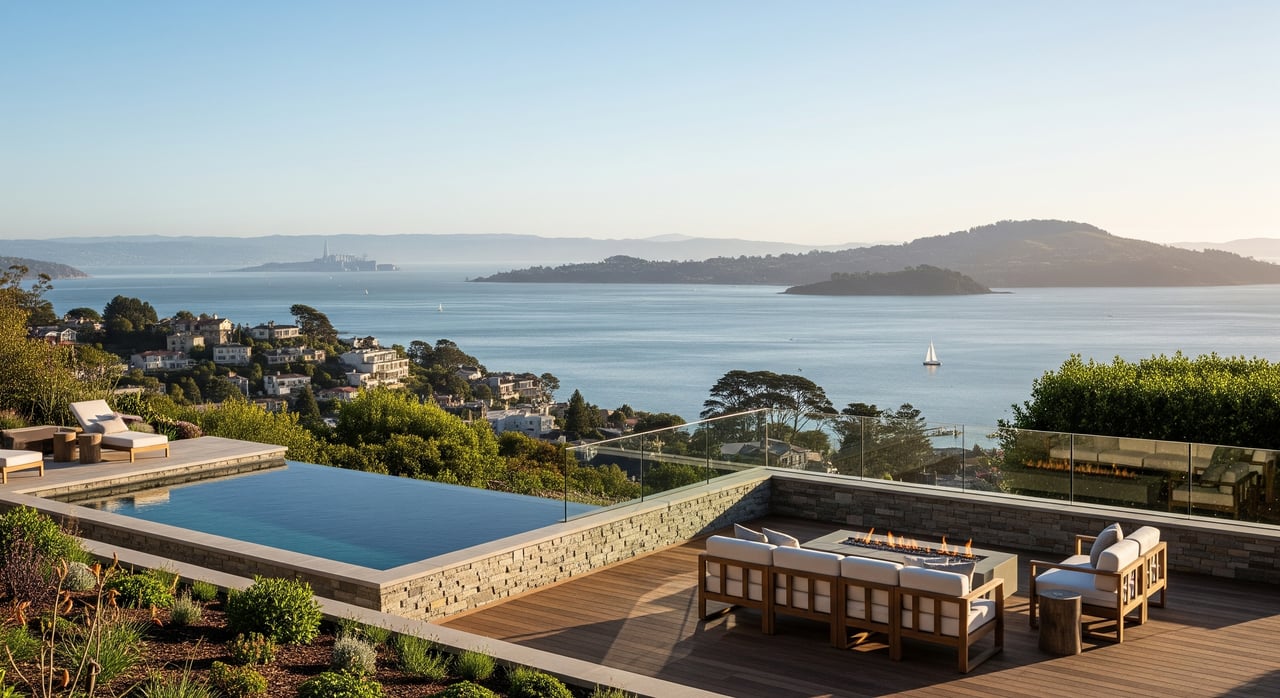
Coffee on the deck with the bay at your feet or sunset on a warm, sheltered terrace above town? If you’re buying in Tiburon, the decision often comes down to waterfront versus hillside. Both offer stunning views and strong resale appeal, but the day‑to‑day experience and long‑term costs can be very different. In this guide, you’ll learn the key tradeoffs, what to look for on tours, and a simple framework to choose with confidence. Let’s dive in.
Price and value drivers
Waterfront homes sit at the top of the Tiburon market, while hillside homes span a wide range from mid‑market to luxury. The premium for water or sweeping bay views varies by the quality of the outlook, privacy, lot depth, and whether the shoreline is private or shared.
To estimate a specific property’s premium, compare recent closed sales in the same micro‑area and control for size, bed/bath count, condition, and lot features. If you cannot find direct comps, use the closest hillside and water‑view sales nearby and adjust for square footage and lot attributes. A comp‑driven approach gives you a reality check without guessing at a fixed percentage.
If you are weighing budget against experience, remember this simple rule: Waterfront positions you at the market’s high end and may attract second‑home or discretionary buyers, while hillside homes draw a broader pool of year‑round residents. Liquidity can vary by price band and property type, so lean on recent local comps and time‑on‑market trends when you set expectations.
Microclimate and comfort
Waterfront settings are typically cooler and breezier in the afternoon. Onshore winds can increase the chill factor and weather outdoor furniture and finishes faster. You may enjoy natural ventilation and unobstructed views, but you will want wind‑aware landscaping and durable exterior materials.
Hillside homes often get more sun and feel warmer and calmer, especially on south‑ or west‑facing slopes. Sheltered terraces can extend outdoor living well into the shoulder seasons. Nighttime fog can still settle, and airflow patterns on steep topography can create colder pockets, but the general pattern holds: waterfront feels cooler and windier, hillsides sunnier and more protected. Regional climate resources, including NOAA, provide helpful context for typical wind and fog patterns.
Access, stairs, and upkeep
Hillside homes can involve steep driveways, switchbacks, and multiple stair flights between parking and living areas. This affects daily life, guest access, and service logistics for deliveries and tradespeople. Maintenance can include retaining walls, drainage upgrades, and periodic slope work. Count the stairs to main living spaces and the garage, and test the driveway for turning radius and slope during your tour.
Waterfront parcels are often flatter, which can simplify access. Some lots step down to the shoreline or a dock, which may still add stairs. Marine exposure increases wear on exterior finishes and fixtures. Expect more frequent painting, corrosion‑resistant hardware, and careful HVAC placement.
If you are planning improvements, ask for permits and maintenance logs related to retaining walls, drainage, seawalls, or dock work. These records help you understand the quality of prior work and future cost expectations.
Hazards and insurance
Every property in Marin deserves a close look at natural hazards and related insurance.
- Waterfront: Parcels near sea level may sit within mapped flood zones and face future sea‑level rise exposure. Review the FEMA Flood Map Service Center for current designations and consult California’s Sea Level Rise Guidance for planning context. If a home requires flood insurance, confirm the premium and any mitigation steps before writing an offer.
- Hillside: Slope stability, earth movement, and seismic considerations are common review items. Major work often requires geotechnical reports and engineered retaining solutions. Vegetation management and defensible space matter in wildland‑adjacent areas. Visit Cal Fire for wildfire hazard information and preparedness resources.
Insurance pricing and availability can differ for both settings. Some carriers may request structural inspections for hillside properties or require specific mitigation for waterfront homes. Before you finalize terms, speak with a local insurance professional, review any recent engineering or geotechnical reports, and check the property’s permit history with the county.
Privacy and lifestyle
Waterfront living offers open‑water privacy in one direction and immediate access to marinas, promenades, and parks. In select areas, public shoreline paths and marina activity can increase foot traffic or boat noise during peak times. Proximity to ferry terminals may introduce intermittent sound and visitor activity. If you value immediate water access or boating, this tradeoff is often worth it.
Hillside parcels can feel more secluded, with natural screening from topography and trees. Many streets are quieter and see fewer visitors. Outdoor living often centers on terraces and view decks rather than large, flat yards. If you prioritize visual privacy and sheltered outdoor spaces, hillside homes tend to deliver.
Commute and daily logistics
Road access to US‑101 runs through Tiburon Boulevard, the area’s main artery. Driving to San Rafael often takes about 10 to 20 minutes depending on your starting point and traffic. Peak commuting by car to downtown San Francisco can range from roughly 25 to 60 minutes depending on conditions.
The Golden Gate Ferry provides a reliable alternative for many Tiburon commuters. Review Golden Gate Ferry schedules and test your commute during the times you would normally travel. Consider parking or walking time to the terminal and your last‑mile plan in San Francisco. If you host often, note on‑street parking constraints on narrow hillside roads and garage capacity in both settings.
How to decide: a simple framework
Use this quick framework to clarify tradeoffs and rank properties you tour.
Step A — prioritize deal‑breakers Assign a 0 to 3 weight to each item based on importance to you.
- Commute by car or ferry
- Need for single‑level or minimal stairs
- Immediate water access or boating
- Year‑round sun and sheltered outdoor areas
- Tolerance for ongoing maintenance and corrosion
- Concern about flood or sea‑level risk
- Desire for privacy and low pedestrian or boat activity
Step B — score each property on tour day Score 1 to 10 for each observable item, then you will apply your weights.
- View quality and orientation
- Wind and exposure felt on terraces or deck
- Number of stairs from parking to main living areas
- Exterior condition: rust, paint, deck and flashing
- Evidence of slope or drainage issues
- Ease for guests and service vehicles
- Time to ferry and to highway access
Step C — rank and retest Multiply your scores by your weights to create a comparative ranking. Shortlist your top three and return at different times of day, especially during commute hours and on a breezy afternoon.
On‑site tour checklist
Bring this list to each showing and capture notes as you go.
- Elevation and flood feel: how high is the main floor above water level; do you see scouring or high‑tide marks nearby
- Stairs count: steps to kitchen, living room, and main bedroom; steps to garage
- Driveway: slope, traction, and turnaround options
- Exterior: rust on hardware, paint failure, deck condition, window flashing
- Slope and drainage: cracks, pooling water, uneven floors, retaining wall condition
- Neighbor and public interface: visibility from nearby homes, proximity to public paths, marinas, or ferry activity
- Utilities and access: main water shutoff location, meter access, on‑street parking
- Documentation: ask for geotechnical or engineering reports, seawall or retaining wall permits, flood insurance history, and records of any water intrusion or slope work
Matching the setting to your goals
- Daily commuter: If you need reliable access to San Francisco, test both the drive and ferry options. Hillside homes can add a few minutes on winding roads, while waterfront properties near the terminal may simplify ferry access.
- Family or multi‑generational living: Prioritize access, stairs, and parking. A flatter lot can make daily routines easier, but a hillside home with minimal stairs can also work. Tour at school‑start and end times to see traffic patterns.
- Downsizer: Focus on single‑level living or elevator potential. Consider maintenance tradeoffs and insurance costs early in your search.
- Investor or second‑home buyer: Weigh the premium for direct waterfront or unobstructed views against liquidity and carrying costs. Confirm hazard, insurance, and ongoing maintenance assumptions to protect your yield and exit strategy.
Local resources and next steps
For waterfront evaluations, start with the FEMA Flood Map Service Center and California’s Sea Level Rise Guidance. For hillside due diligence and wildfire awareness, review Cal Fire resources. If you are planning a daily boat commute or weekend trips into the city, validate schedules with Golden Gate Ferry. For broader context on wind and fog, consult NOAA.
When you are ready to compare specific addresses, use a comp‑driven valuation and a hazards‑plus‑maintenance review to narrow your list. A local, data‑savvy advisor can help you quantify the waterfront premium, interpret disclosure packages, and pressure‑test insurance and mitigation costs before you commit.
If you want a thoughtful, finance‑forward partner for Tiburon and greater Marin, reach out to Omari Williams. Book an Appointment and get a tailored plan for your tours, comps, and offers.
FAQs
How much more do Tiburon waterfront homes cost?
- Waterfront sits at the top of the market, but the premium varies by view quality, privacy, and lot depth; use recent closed comps on the same street or nearby to quantify it.
Are waterfront homes higher maintenance in Tiburon?
- Yes; marine exposure and wind typically increase exterior maintenance and call for corrosion‑resistant materials and more frequent finish updates.
Are Tiburon hillsides warmer than the waterfront?
- Often yes; hillsides are typically sunnier and more sheltered from bay breezes, while waterfront locations tend to feel cooler and windier.
Is the ferry a reliable Tiburon commute option?
- It can be for many buyers; confirm your timings and parking by testing Golden Gate Ferry during your normal commute hours.
Should I worry about sea‑level rise on the Tiburon shoreline?
- Research current FEMA flood zones and review California’s Sea Level Rise Guidance; ask about mitigation, prior claims, and insurance before offering.
Do stairs and steep driveways affect resale in Tiburon?
- They can limit the buyer pool for those needing single‑level living, though many Tiburon buyers accept stairs as part of hillside living; plan for this in pricing and marketing.